
The Transformative Power of Reading: Cultivating a Lifelong Habit for Worldview and Imagination
Introduction: The Stewardship of the Inner Life
The ability to read is a great blessing, but the choice of what to read is an act of profound stewardship.
Reading is not just passive consumption; it is the most active, formative discipline we can teach our daughters. It is the essential practice for shaping their inner life and building their worldview. For the mother committed to the Legacy of Learning, the most enduring gift is teaching a child how to curate her intellectual companions wisely.
True intellectual growth requires intentionality, curation, and the commitment to only invite in living ideas. This cornerstone guide provides a time-tested framework, drawing on the wisdom of renowned educators and mothers, to help you set the highest standards for the literature that shapes your daughter’s soul.
I. The Mind as a Spiritual Organism
The foundation for setting excellent literary standards begins with a simple, yet profound, truth articulated by the educator Charlotte Mason: The mind is not a vessel to be filled, but a spiritual organism that must feed on ideas to grow.
Like the body, the mind needs nourishment—not just dry facts or data—but “living ideas” transmitted through thoughtful, well-written literature. When we only offer our children “twaddle” (shallow, diluted content), we starve the mind, leaving it weak and unprepared for the deeper philosophical and moral challenges of life.
This understanding elevates the mother’s role from merely ensuring basic literacy to becoming the Chief Curator of Truth and Beauty in the home. As Sally Clarkson powerfully emphasizes, we are responsible for establishing a culture of reading—an atmosphere where books are revered, accessible, and often discussed. This quiet, persistent rhythm transforms reading from a solitary chore into a sacred family ritual.
When a mother is intentional about protecting the time and space for reading, she is investing in her daughter’s future. The moment where she settles into a quiet corner with a beloved book becomes a powerful counterpoint to a frantic world.
This pursuit of intellectual grace is an act of understated elegance, demonstrating that the quality of one’s thoughts matters more than external display. Investing in this kind of intentional care today (perhaps using the principles of setting up an organized routine) builds a woman who values what is enduring over what is fleeting.
II. The Living Book Standard: Discerning Quality from “Twaddle”
The standard we apply to literature must be as rigorous as the standard we apply to character. If the mind is a spiritual organism, then our duty as mothers is to ensure it is fed the very best.
The educator Charlotte Mason gave us the enduring principle of the “Living Book”—a book written by one passionate mind to another, rich with ideas, strong narrative, and compelling language. These books demand assimilation, asking the reader to think and narrate the idea, rather than just passively receiving facts.
The opposite is “twaddle”—watered-down textbooks, simplistic summaries, or content so diluted it offers the mind no real sustenance. To choose a Living Book is an act of Stewardship, honoring the value of our daughter’s time and intellectual capacity.
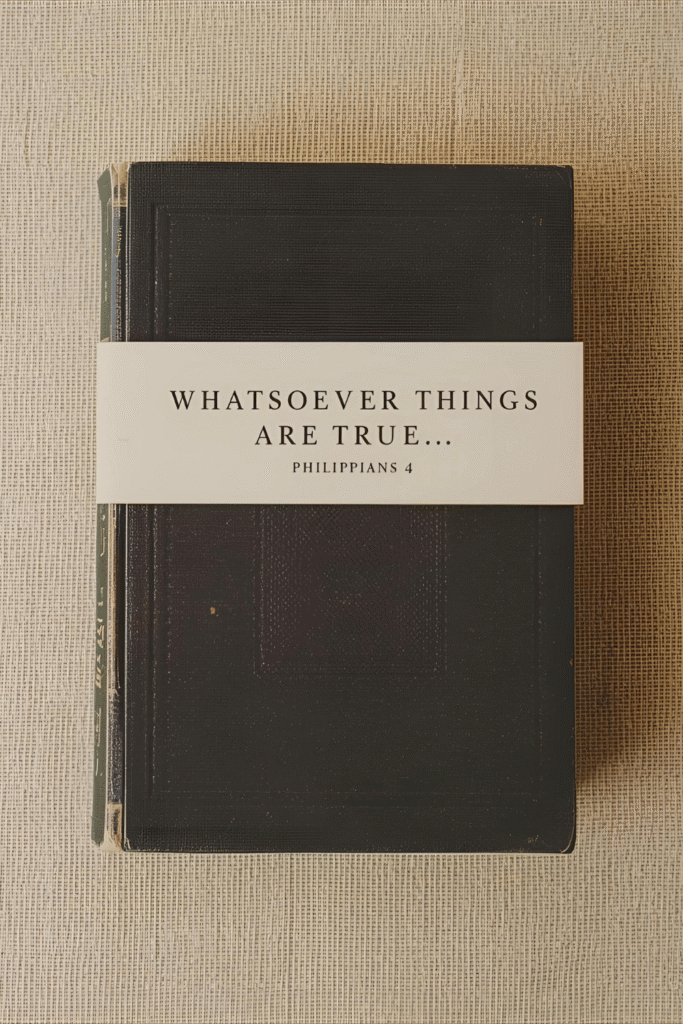
Beyond the literary quality, Christians must apply a scriptural lens to our selections. The ultimate test for any piece of literature is found in Philippians 4:8 (KJV):
"Finally, brethren, whatsoever things are true, whatsoever things are honest, whatsoever things are just, whatsoever things are pure, whatsoever things are lovely, whatsoever things are of good report; if there be any virtue, and if there be any praise, think on these things."
This divine standard guides our intellectual curation. It affirms the approach we should seek is truth, beauty, and goodness. Guide her to literature that is moral, uplifting, and filled with appreciation for God’s creation and virtue. We must intentionally seek books that inspire reverence, courage, and beauty, while avoiding those that breed cynicism, encourage disrespect, or glorify what is fleeting. By applying this scriptural filter, we ensure our daughters’ Legacy of Learning is built on the purest and most enduring foundation.
III. Curating for Character: Setting Moral and Aesthetic Standards
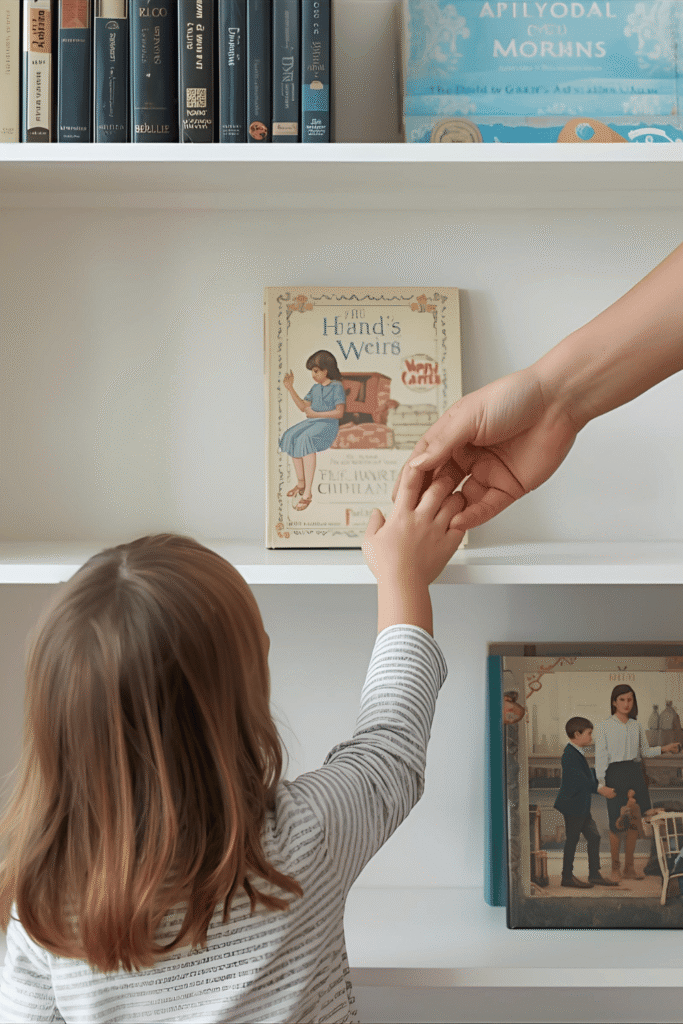
The mother’s role as the Curator extends far beyond merely filling a bookshelf; it is an active effort to form her daughter’s internal landscape. As Charlotte Mason taught, character is largely formed by habits—and this includes the habits of the mind. When we consistently choose literature that is noble, uplifting, and honest, we are installing the intellectual habits of virtue and discernment into our children. We are training them to desire the pure, the just, and the lovely.
This requires mothers to actively model the character traits we want our daughters to exhibit: the habit of deep reading, the patience of intellectual pursuit, and the wisdom of careful discernment. The books we keep and read aloud are a visible testimony to the standards we uphold for our family’s Legacy of Learning.
The Necessity of Exclusion
Curating for character often means setting firm boundaries on what we permit to enter the sanctuary of the mind as well as our homes. This is an essential act of Stewardship. We must vigilantly protect our daughters from literature that:
- Breeds Cynicism: Content that mocks virtue, belittles the sacred, or encourages an overly critical and negative view of the world.
- Normalizes the Mundane: Stories that are excessively focused on fleeting trends, shallow materialism, or that fail to inspire noble thought.
- Exposes Prematurely: We must guard against narratives that introduce themes of vice or moral complexity before a child’s conscience and worldview are adequately developed.
By applying the scriptural standard of Philippians 4:8, we affirm the need, championed by The Good and the Beautiful, for content that is morally sound and aesthetically elevating.
The Cultivation of Internal Grace
The books that remain after this careful filtration should serve as quiet guides to a life of understated elegance and true inner dignity. They should inspire courage, reverence, humility, and a deep appreciation for the natural world and the Creator’s design. When a girl learns to appreciate and consume beautiful literature, she cultivates an internal grace that will be reflected in her demeanor, her speech, and her eventual role in the home. The integrity of her reading habit is a mirror of the integrity of her soul.

IV. The Quiet Ritual: The Aesthetics of Learning
The intentional work of curating our daughter’s library must be paired with the ritual of engaging with it. It’s not simply what she reads, but how and where she reads that shapes the habit and the memory. This concept, often championed by Sally Clarkson, emphasizes creating a culture of reading—an aesthetically simple, serene practice that encourages her to prioritize time with her books.
We must carve out a space in the home where the pursuit of knowledge is dignified and welcomed. This Quiet Ritual is a powerful act of Stewardship of Time, setting the boundary against the noise and hurry of the modern world. Designate a cozy armchair, a sunlit window seat, or a simple reading nook where she can retreat. The environment itself should reflect understated elegance: simple comfort, soft lighting, and minimal distraction. When we prepare a beautiful space for learning, we subtly teach our daughters that their intellectual life is worthy of honor.
Keep thy heart with all diligence; for out of it are the issues of life - Proverbs 4;23
This is where the role of high-quality accessories becomes profound. When a girl uses a quilted book sleeve to protect her latest read, or finds a dedicated Quiet Corner Keeper pillow to support her book, she is learning a practical lesson: The tools of learning are treasures worthy of protection.
Protecting her books from wear and tear is an act of stewardship over her intellectual property, ensuring that her favorite stories and foundational texts can last long enough to become part of the family Legacy of Learning.
V. From Phonics to Philosophy: Building Foundational Skills
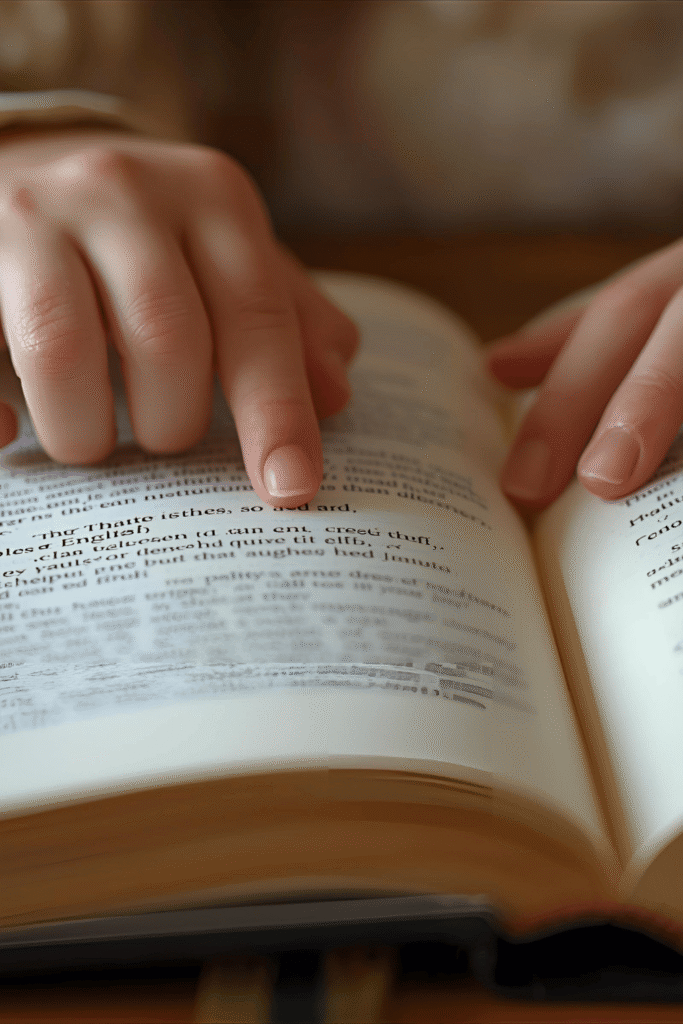
While we speak extensively of the beautiful ideas found within books, the Legacy of Learning must begin with the practical work of learning how to read with excellence. We can only engage with deep philosophical concepts if we are not struggling with the mechanics of the alphabet and the structure of words.
Educators like Ruth Beechick have long championed the importance of strong, systematic instruction in foundational literacy skills, particularly phonics. This meticulous, systematic approach ensures that the child develops fluency and true comprehension, moving past word-guessing to solid mastery. When a child learns to read well, she gains an indispensable tool for independent study and intellectual growth.
This practical diligence directly supports the philosophical aim of Charlotte Mason’s method. Only once the mechanics of decoding are automatic can the mind be truly free to grapple with the “living idea” presented on the page.
By committing to this initial Stewardship of Skill, we equip our daughters for a lifetime of intellectual industry. Furthermore, the constant exposure to rich vocabulary and refined prose found in quality literature naturally expands their own verbal expression, contributing to the poise and dignity that defines understated elegance in communication.