

How to Tame Frizzy Hair Naturally: Year-Round Tips for Waves and Curls
Frizz is the great equalizer of motherhood.
Doesn’t matter if you have professional styling skills or barely manage a ponytail—humidity will humble you, especially if you live in the Deep South as I do. Winter static will mock your efforts. And your daughter’s beautiful curls will choose the worst possible moment (church photos, family portraits, the day she’s presenting at co-op) to stage a full rebellion.
I know this because I have four daughters with four different hair textures. One has pin-straight hair that frizzes in humidity. Two have gentle waves that turn to fuzz in dry winter heat. And one has gorgeous curls that require an entirely different approach to everything.
What I’ve learned over a decade of trial, error, and approximately 47 failed products: frizz isn’t actually the problem. How we respond to it is.
True frizz control doesn’t require harsh chemical relaxers, hours with a flat iron, or expensive salon treatments. It requires understanding what your daughter’s hair is trying to tell you—and working with it instead of against it.
Here’s your complete guide to naturally taming frizz year-round, tested on real daughters with real hair.
UNDERSTANDING FRIZZ: WHAT’S ACTUALLY HAPPENING
Before we talk solutions, let’s talk science. (Brief science—I promise.)
Frizz is hair seeking moisture.
Your hair’s outer layer (the cuticle) is like shingles on a roof. When those “shingles” lie flat, hair looks smooth and shiny. When they lift up, hair looks frizzy and dull.
Why cuticles lift:
In Summer/Humidity:
The air is saturated with moisture. If your daughter’s hair cuticle isn’t properly sealed, it absorbs that moisture like a sponge. The hair shaft swells. The cuticle lifts. Result: frizz.
In Winter/Dryness:
Indoor heating strips moisture from the air. Dry hair becomes brittle, creates static, and the desperate search for moisture causes cuticles to lift. Different cause, same frizzy result.
Here’s what matters: You can’t control the weather. But you can control how sealed and moisturized your daughter’s hair cuticle is.
That’s where everything we’re about to discuss comes in.

STEP 1: KNOW YOUR DAUGHTER’S HAIR (ACTUALLY KNOW IT)
I spent two years using the wrong products on my curly-haired daughter because I assumed “good hair products” worked universally.
They don’t.
What you need to identify:
Hair Porosity (How It Absorbs Moisture)
Low Porosity: Cuticles lay flat. Water beads on surface. Takes forever to get wet, forever to dry. Needs lightweight products or everything sits on top and looks greasy.
High Porosity: Cuticles are lifted/damaged. Absorbs moisture quickly but loses it just as fast. Needs heavier products and extra sealing.
Test it: Drop a clean strand of hair in water. Floats = low porosity. Sinks immediately = high porosity. Hovers midway = normal.
Curl Pattern (What’s Natural)
Don’t fight what God gave her. Trying to make 3B curls behave like 2A waves creates frustration, damage, and frizz.
2A-2C (Wavy): Needs lightweight moisture, gentle hold, and products that won’t weigh it down.
3A-3C (Curly): Needs more moisture, definition products, and techniques that clump curls together.
4A-4C (Coily/Kinky): Needs the most moisture, rich products, and protective styling. (If this is your daughter, I highly recommend seeking specialized guidance—my expertise is more limited here.)
Hair Density (How Much There Is)
Fine hair: Less product, lighter formulas, or it looks greasy.
Medium hair: Can handle most products.
Thick hair: Needs more product, heavier formulas, or nothing penetrates.
Why this matters: The leave-in conditioner that works beautifully on my fine-haired daughter makes my thick-haired daughter’s hair look greasy and weighed down. Different hair, different needs.
Stop buying products because they’re popular. Start buying products because they match your daughter’s specific hair structure.

STEP 2: THE FOUNDATION IS MOISTURE (NOT PRODUCTS)
Here’s what I wish someone had told me years ago: you cannot fix dry hair with products alone.
Dry hair will absorb moisture from humid air (causing frizz). Dry hair will create static in winter (causing frizz). Dry hair is the root problem. Products are tools that help maintain moisture—they don’t create it.
The Wash Routine That Actually Works
1. Wash Less Frequently
This feels counterintuitive, but washing strips natural oils. Those oils seal the cuticle and prevent frizz. Wash too often, and you’re removing your hair’s natural defense system.
How often depends on texture:
- Straight to wavy: 2-3 times per week
- Curly: 1-2 times per week
- Coily: Once per week or less
Yes, even in summer humidity. Use dry shampoo between washes if needed.
2. Use Lukewarm Water (Not Hot)
Hot water opens the cuticle (which you’re trying to keep closed). Wash with lukewarm water, then finish with a cool water rinse to seal everything shut.
I know. Cool water in winter is miserable. Do it anyway. This one change makes a noticeable difference.
3. Condition Like You Mean It
Apply conditioner mid-shaft to ends (not roots—unless hair is very dry). Leave it on for 2-3 minutes while you do other shower tasks. Rinse thoroughly with cool water.
For curly hair: Consider co-washing (conditioner-only washing) between shampoo sessions. Curly hair needs more moisture than shampoo allows.
4. Never Rub Hair Dry
Terrycloth towels create massive friction. Friction = frizz.
Use a microfiber towel or a soft cotton t-shirt. Gently squeeze (don’t rub) excess water out. Better yet, let it air-dry partially before touching it at all.
My daughters know: if I see them rubbing their hair with a regular towel, I’m confiscating it. We’ve been through this.

STEP 3: THE RIGHT PRODUCTS (IN THE RIGHT ORDER)
Now that hair is clean and properly moisturized, we seal it in.
The Product Hierarchy for Frizz Control:
1. Leave-In Conditioner (Non-Negotiable)
This is your moisture seal. Applied to damp (not soaking) hair, it keeps cuticles hydrated so they don’t seek moisture from the air.
For fine/wavy hair: Lightweight spray leave-ins
For curly/thick hair: Cream-based leave-ins
Apply to mid-shaft through ends. Avoid roots or everything looks greasy.
2. Oil or Serum (The Lock)
Once moisture is in, you seal it with oil. This creates a barrier so moisture can’t escape and humidity can’t get in.
Natural options that work:
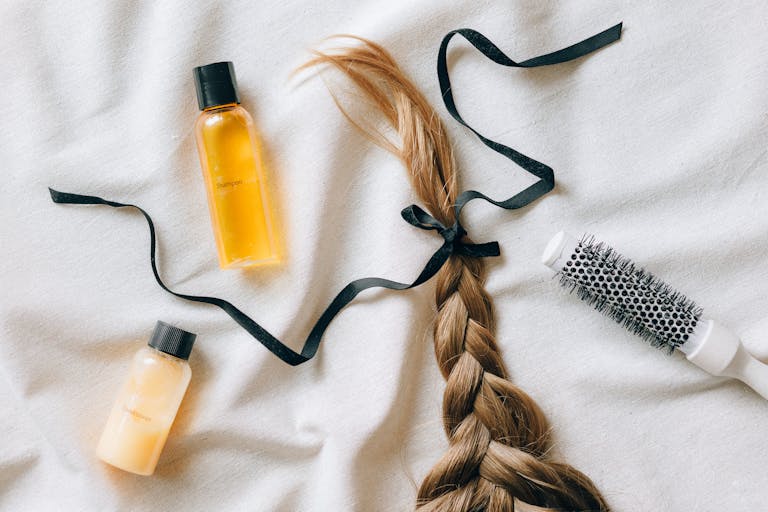
- Argan oil (lightweight, good for most hair types)
- Jojoba oil (mimics natural scalp oils)
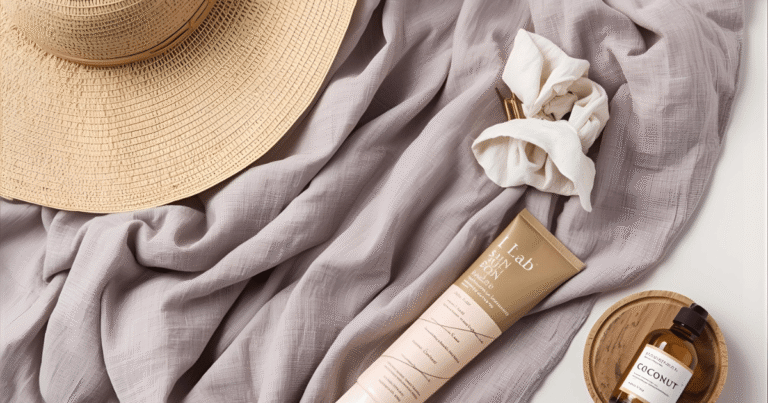
- Coconut oil (heavier, best for very dry/thick hair)
Use tiny amounts. Start with 2-3 drops, warm between palms, smooth over ends and mid-shaft. You can always add more—you can’t remove excess.
3. Styling Product (Optional for Hold)
If your daughter needs curl definition or wave hold, add a light gel or mousse after oil.
Scrunch it in gently (don’t rake through—breaks up natural clumps). Let it dry completely, then “scrunch out the crunch” for soft, defined texture.
The Order Matters:
Leave-in → Oil → Styling product
Wrong order and nothing works properly. I learned this the expensive way.
STEP 4: STYLING TECHNIQUES THAT REDUCE FRIZZ
Products help. Technique matters more.
For Wavy Hair:
1. Scrunch, Don’t Brush
Once hair is damp with product, scrunch it upward toward your scalp. This encourages wave formation without breaking up the pattern (which creates frizz).
2. Plop to Dry
Use a t-shirt or microfiber towel to “plop” hair on top of her head while it dries. This keeps waves defined without letting them stretch out (which causes frizz). This technique replaces the “twisted towel turban” on top of the head.
3. Touch It As Little As Possible
Every time you touch drying hair, you create frizz. Set it and walk away.
For Curly Hair:
1. Apply Products to Soaking Wet Hair
Curls need more water to form properly. Apply products when hair is dripping—the water helps distribute product evenly and encourages curl clumps.
2. Use Praying Hands + Scrunching
Smooth product down the hair shaft with praying hands motion, then scrunch upward. This defines curls while minimizing frizz.
3. Diffuse on Low Heat (or Air Dry)
If using a dryer, use a diffuser on low heat and low speed. High heat = frizz. Or better yet, let it air dry completely.
4. Don’t Touch Until Completely Dry
I cannot stress this enough. Touching drying curls = frizz. Even if it looks perfect while wet, wait until it’s 100% dry.
For Straight Hair:
1. Detangle Wet Hair
Only detangle while the conditioner is still in the hair. Use a wide-tooth comb to gently work through tangles, starting from the ends and moving upward. Detangling dry or semi-dry straight hair causes friction and breakage, which equals frizz.
2. Blot With Softness
Gently blot and squeeze excess water using a microfiber towel or an old cotton T-shirt. This absorbs moisture without causing friction, keeping the hair shaft smooth and flat.
3. Apply Leave-In
While the hair is still damp (not soaking wet), mist a lightweight leave-in conditioner or conditioning mist through the mid-lengths and ends. This provides all-day moisture and acts as a barrier against humidity. Apply a dime-sized amount of a lightweight smoothing serum or oil (like Argan or Jojoba) to the mid-lengths and ends. This adds a protective layer, tames fly-aways, and boosts shine. Avoid the roots to maintain volume.
4. Strategic Drying
Air Dry: If time allows, air dry until the hair is 90% dry. Less heat exposure is kinder to the hair’s structure.
Blow Dry Technique: If you must use a dryer, always use a nozzle attachment and point the airflow down the hair shaft, moving from root to tip. Use a medium or cool heat setting. This technique physically pushes the cuticle down for a smoother result.
If using heat tools (like a flat iron), ensure you have applied a heat protectant first, and always use the lowest effective heat setting (ideally below 370°F).
For All Hair Types:
Sleep Protection is Non-Negotiable
You can do everything right during the day, and eight hours on a cotton pillowcase will undo it all.
Solutions:
- Satin or silk pillowcase: Reduces friction dramatically
- Satin bonnet: Keeps hair completely contained (best for curls)
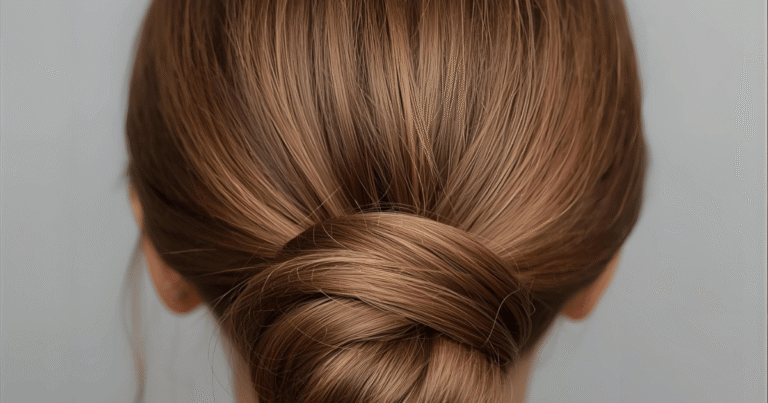
- Loose braid or bun: Protects hair from rubbing against pillow
This one change might solve 50% of your frizz problems. Cotton pillowcases are hair’s worst enemy.
STEP 5: ACCESSORIES THAT HELP (NOT HARM)
Not all hair accessories are created equal. Some actively create frizz and damage.
What to Avoid:
Metal or rubber elastics: Create breakage, tangles, and frizz at the ponytail line
Plastic clips with teeth: Catch and snag hair, creating frizz
Tight headbands: Create dents and frizz along the band line
What to Choose:
Satin scrunchies: Gentle hold without friction. Our satin scrunchie collection was specifically designed for frizz-prone hair—no pulling, no breakage, no creases.
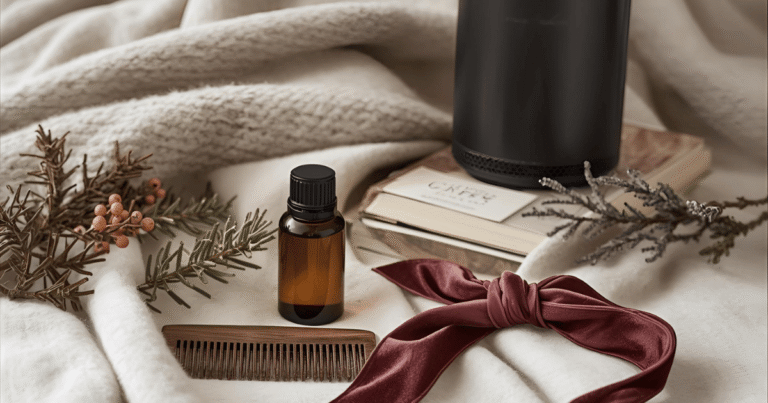
Soft ribbon ties: Wide surface area distributes pressure evenly. Can be topped with a clip or bow for elegance.
Smooth clips: Our alligator clips are designed to grip without teeth that catch and snag. Secure hold without damage.
Satin-lined headbands: If you need a headband, choose one with satin lining that touches hair (our fleece ear warmers are lined with satin for this reason).
The principle: Anything touching her hair should be smooth. Friction creates frizz. Always.
SEASONAL ADJUSTMENTS: WHAT CHANGES
Summer/Humidity Strategy
Goal: Keep moisture IN, humidity OUT
Key moves:
- Use slightly heavier sealants (oils/serums)
- Reapply light oil mid-day if needed
- Opt for protective styles (braids, buns) on extremely humid days
- Keep a small bottle of anti-frizz serum in your bag for emergency touch-ups
Reality check: You’re not going to eliminate all frizz on 90% humidity days. The goal is “manageable and still pretty,” not “looks like she just left the salon.”
Winter/Dry Heat Strategy
Goal: Add moisture, eliminate static
Key moves:
- Use a humidifier in bedrooms (game-changer)
- Switch to richer, more moisturizing products
- Add a weekly deep conditioning treatment
- Avoid wool hats directly on hair (use satin-lined or our fleece ear warmers)
- Combat static with a tiny amount of oil smoothed over surface
Pro tip: Keep a small spray bottle of water mixed with a few drops of leave-in conditioner. Quick spritz when static strikes.
THE STEWARDSHIP PRINCIPLE: CARING FOR WHAT WE’VE BEEN GIVEN
“She is clothed in fine linen and purple; her husband is respected at the city gate.” (Proverbs 31:22-23)
The Proverbs 31 woman was industrious, capable, and wise. She also presented herself and her household well—clothed in quality fabrics, managing her home with excellence.
Caring for your daughter’s hair isn’t vanity. It’s stewardship.
We’ve been given these daughters to raise, these bodies to care for, these days to steward well. Teaching your daughter to care for her hair properly is teaching her:
- That she’s worth the time and care it takes to do things well
- That stewardship includes her physical body, not just her character
- That quality and intention matter in small daily choices
- That we work with what God gave us, not against it
When we teach our daughters that hair care is frivolous, we’re teaching them that their physical presentation doesn’t matter. When we teach them that appearance is everything, we’re teaching them that character doesn’t matter.
The truth is both/and: Your character matters most. Your presentation matters too.
Caring well for the hair God gave your daughter—whatever texture, whatever curl pattern, whatever challenges—is an act of faithfulness in small things.
And faithful stewardship in small things prepares her for faithful stewardship in large things.
YOUR ACTION PLAN: START HERE
Feeling overwhelmed? Start with these three changes this week:
1. Add a cool water final rinse to every hair wash
2. Switch to a microfiber towel or t-shirt for drying
3. Invest in a satin pillowcase or bonnet
These three changes require almost no additional time but will dramatically reduce frizz. Master these, then add the other techniques gradually.
Remember: You’re not trying to change your daughter’s hair texture. You’re trying to help it be the healthiest, most beautiful version of what it naturally is.
Work with her hair, not against it. Choose quality over convenience. Teach stewardship through daily care.
That’s everyday elegance in action.

READY TO TAME THE FRIZZ?
Download: Complete Frizz Control Checklist (Free printable guide)
Watch: Frizz Control Tutorial on YouTube
Shop: Satin Hair Accessories for Frizz-Prone Hair
Pin this guide for later! Help other mothers taming frizz naturally.
What’s your biggest frizz challenge? Summer humidity? Winter static? Drop a comment—I’d love to help troubleshoot your specific situation.
Cultivating beauty with you,
Melissa
I have frizzy hair and this was a great read! Thank you!