

Five Ways to Protect the Season of Girlhood in a Culture That Wants to Steal It
I watched her walk through the automatic doors at Target and my heart sank.
She couldn’t have been more than twelve years old, but she was dressed like she was headed to a nightclub. Full makeup. Crop top. Ripped jeans sitting low on her hips. Hair styled in a way that looked more sultry than sweet.
Her mother walked beside her, scrolling through her phone, seemingly unaware that her daughter’s childhood had quietly slipped away.
I’m not sharing this to judge that mother. I don’t know her story, her struggles, or the pressures she faces. But I do know this: somewhere along the way, the culture won. It convinced her that this was normal. That this was fine. That girlhood wasn’t worth protecting.
And if we’re honest, the same culture is whispering to us every single day.

The Truth About Girlhood
Girlhood is a season. Not a rushed transition from baby to teenager, not an inconvenient phase to hurry through, but a distinct, precious season with its own purpose and beauty.
It’s the season when a girl learns who she is apart from boys. When she develops her character, discovers her gifts, and builds the foundation of her identity. It’s when she’s allowed to be innocent, playful, creative, and free from the pressure to be sexually attractive.
Our culture wants to steal this season. They want ten-year-olds worried about their weight. Twelve-year-olds navigating romantic relationships. Fourteen-year-olds dressing to attract male attention. Sixteen-year-olds so anxious and depressed they can barely function.
And here’s the hard truth: if we’re not intentionally protecting girlhood in our homes, the culture will steal it by default.
So what do we do?

1. Guard Her Eyes
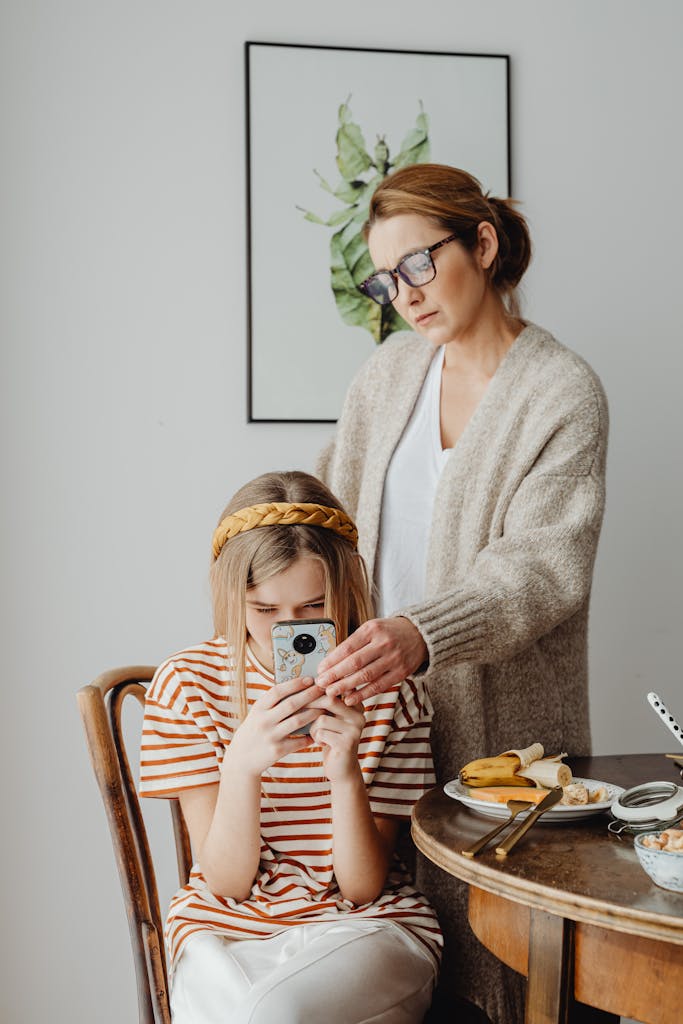
The images our daughters consume shape how they see themselves and the world around them.
When a girl spends hours scrolling through social media, she’s not just passing time. She’s absorbing thousands of images that teach her what beauty looks like, what bodies should look like, what relationships should look like, what she should want and value and become.
Most of these images are not showing her girlhood. They’re showing her a sexualized, adultified version of womanhood that she’s nowhere near ready for.
What this looks like practically:
Delay social media as long as possible. I know this makes you the “mean mom.” I know “everyone else” has it. But every year you delay is a year she’s not comparing herself to filtered images and curated lives.
If she does have social media, use parental controls. Monitor what she’s following. Have regular conversations about what she’s seeing and how it makes her feel. And if accounts are making her feel “less than,” unfollow them immediately.
Curate her media diet intentionally. Classic books instead of dystopian YA novels. Little House on the Prairie instead of shows that treat teen sex as inevitable. Family movie nights instead of whatever Netflix is pushing.
Yes, she’ll complain that you’re being overprotective. But you’re not protecting her from growing up. You’re protecting her from growing up too fast.

2. Delay Dating and Romantic Relationships
I can already hear the pushback on this one. But stay with me.
Girlhood is the season to learn who she is apart from romantic attention. It’s when she develops her interests, her character, her faith, her sense of self. When we allow (or even encourage) romantic relationships too early, we shift her focus from becoming to attracting.
I’ve watched it happen over and over. A girl who was confident, engaged in activities, excited about her interests suddenly becomes consumed with a boy. Her identity becomes wrapped up in whether he likes her, whether the relationship is going well, whether she’s attractive enough to keep his attention.
This isn’t what girlhood is for.
What this looks like practically:
Set clear expectations early. In our home, we don’t date until after high school, and even then it’s intentional and supervised. Some families wait until eighteen. Some practice courtship instead of dating. There’s no one-size-fits-all answer, but there should be a thoughtful answer.
Explain the why behind your boundaries. It’s not because boys are evil or relationships are bad. It’s because this season is for something else. She has her entire adult life to navigate romantic relationships. Right now, she gets to just be a girl.
Help her see the freedom in this. While her friends are dealing with boyfriend drama, breakup heartache, and the pressure to keep a boy interested, she gets to focus on becoming the woman God created her to be.
And here’s what I’ve seen: girls who are protected in this way often end up more confident, more secure in their identity, and better equipped for healthy relationships later.

3. Teach Her That Beauty and Modesty Can Coexist
One of the biggest lies our culture tells is that modesty means frumpy. That if a girl dresses modestly, she can’t be beautiful or fashionable or feel good about herself.
This is complete nonsense.
Modesty isn’t about making girls feel ashamed of their bodies or hiding their femininity. It’s about teaching them that their value isn’t in their physical appearance, and that they don’t need to advertise their bodies to be noticed or valued.
But here’s the key: we can’t just tell her what not to wear. We have to show her what beauty looks like when it’s rooted in dignity instead of attention-seeking.
What this looks like practically:
Take her shopping and help her find clothing that’s both modest and stylish. Show her that she can look put-together and feel confident without showing everything.
Teach her the difference between dressing to feel beautiful and dressing to be looked at. One honors her dignity. The other trades it away for male attention.
Model this yourself. If you’re dressing immodestly, your words about modesty won’t carry weight. Show her what it looks like to be both beautiful and dignified.
And here’s the thing: when girls are dressed in a way that honors their season of life, they actually seem more confident. They’re not constantly tugging at hems or adjusting necklines. They’re not worried about how they look from every angle. They’re free to just be.

4. Create Rituals That Reinforce Her Identity
In a world that’s constantly telling our daughters who they should be, we need to create rhythms that remind them who they actually are.
These don’t have to be elaborate or expensive. In fact, the simple, repeated rituals are often the most powerful.
What this looks like practically:
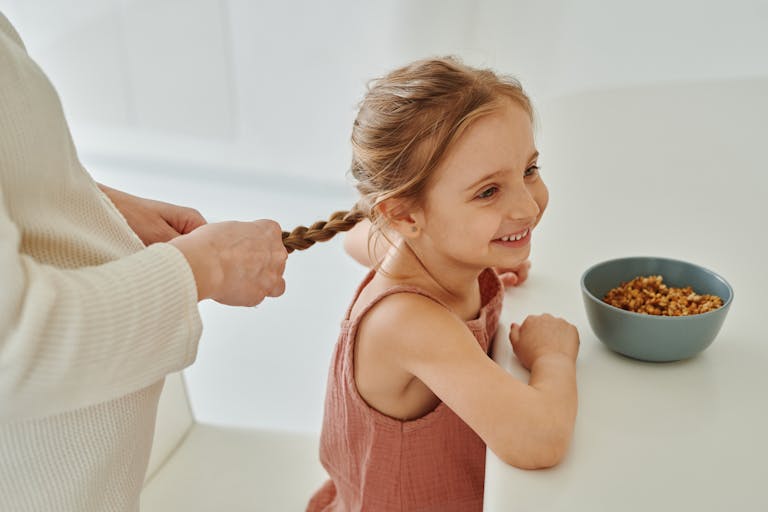
Morning hair time. This has become a habit, if not a tradition, in our home. Those five to ten minutes when I brush her hair, help her choose a bow, maybe braid or style it. It’s connection time. It’s when I can speak life over her, pray quietly, ask about her day.
Bedtime conversations. After the rush of the day, this is when real talk happens. When she shares what’s really on her heart, when we can address fears or questions or struggles.
Reading a book together, chapter by chapter, and discussing it have created a natural setting for having the big discussions about life. It all started with simple stories at bedtime and grew from there. Don’t allow the busyness of life to steal this wonderful connection time from you.
Weekly mother-daughter time. Maybe it’s Saturday morning breakfast, maybe it’s a walk after dinner, maybe it’s baking together on Sunday afternoons. Friday’s are for piano lessons, that’s when we have our time, set aside on the calendar, to share some “girl time” and talk. Whatever it is, it’s consistent. It’s protected. It’s hers.
These rituals do something powerful: they ground her. When everything else is chaotic and confusing, these rhythms remind her that she’s loved, she’s valued, she’s safe. They reinforce that her identity is daughter, not what the culture is trying to make her.

5. Limit Her Exposure to Adult Content and Conversations
This one is tricky because we live in a world where adult content is everywhere. But just because it’s everywhere doesn’t mean our daughters need to be exposed to it.
I’m not talking about sheltering her from reality or keeping her ignorant about important topics. I’m talking about age-appropriate exposure. There are conversations she needs to have at sixteen that she doesn’t need at ten. There are realities of adult life that she’ll face soon enough without us rushing her there.
What this looks like practically:
Be mindful of what’s discussed in front of her. Adult topics, marital struggles, political debates, church drama—she doesn’t need to carry the weight of these conversations yet.
Monitor what she’s exposed to at school or co-op, church, and friends’ houses. This doesn’t mean hovering or being paranoid. It means knowing what environments she’s in and what messages she’s receiving there.
Have age-appropriate conversations about hard topics before the culture does. You want to be the first voice she hears about bodies, sex, relationships, and identity. If you wait too long, someone else will fill that void with lies.
When adult content or conversations do come up (and they will), use them as teaching moments. Don’t panic or shame. Just gently redirect and explain that some things are for adults, and right now, she gets to just be a girl.
The Long Game
Here’s what I want you to hear: protecting girlhood isn’t about creating a bubble that will eventually pop. It’s about creating a foundation that will hold.
The girl who is protected in her season of girlhood isn’t unprepared for adulthood. She’s better prepared because she had time to become. Time to develop her character. Time to build her identity on something solid. Time to learn who she is before the world told her who to be.
Will she push back sometimes? Yes. Will she complain that you’re too strict? Probably. Will she feel different from her peers? Likely.
But one day, she’ll understand. One day, she’ll thank you for holding the line when everyone else let go. One day, she’ll protect her own daughters the same way you protected her.
You’re Not Alone
If you’re reading this and feeling the weight of swimming upstream, I want you to know: you’re not alone. There are thousands of mothers just like you who are making these same counter-cultural choices every single day.
We are building a great community for intentional mothers just like you on Facebook. The Hive Collective Mamas is a safe place for like-minded moms to ask questions and share wins. Check out our private community here.
The culture may be loud, but you are her mother. And the choices you make today are building something the culture can’t touch: a daughter who knows her worth, understands her season, and enters adulthood equipped for what’s ahead.
That’s worth fighting for.
What’s one way you’re protecting girlhood in your home? Share in the comments below. Let’s encourage each other in this sacred work.




This is beautiful! As a homeschooling mother to 3 girls and 4 boys it can be hard to always remember to fit in mother daughter time, especially individually. But, I love the rituals ideas! I love the idea of starting it young with hair time. I already spend bedtime with my girls because 2 of my 3 girls are my youngest children. But, I see how I can be more intentional with conversations during this time with my older daughter as well. I also recently bought her a mother daughter journal we pass back and forth that encourages us to stay connected. But, I also love your thoughts on these years of protection also being preparation.
Wonderful advice