

Does God Care What I Wear? (And What That Means for Raising Daughters)
I’ve stood in my daughter’s closet on a Sunday morning, holding two dresses and genuinely wondering: does God actually care which one she wears? Does the hemline length matter to Him? The neckline depth? Or am I imposing cultural standards in His name, creating rules where He intended freedom?
It’s an honest question, one I suspect many Christian mothers have wrestled with while navigating the tension between legalism and license. We know Scripture tells us God looks at the heart, not outward appearance (1 Samuel 16:7). We’ve heard that verse quoted countless times, usually right before someone dismisses any conversation about modesty as shallow or pharisaical.
But here’s what I’ve come to understand after years of wrestling with this question, studying Scripture, and raising four daughters: the answer is both simpler and more complex than we’d like it to be.
God absolutely cares what we wear. Not because He’s keeping a celestial checklist of acceptable hemlines, but because our clothing choices flow from and reveal the condition of our hearts. He cares about the why behind what we choose, what our appearance communicates, and whether we’re stewarding the body He created with the dignity it deserves.
The question isn’t “does this specific outfit offend God?” The question is “what does my approach to dressing reveal about what I truly value?”

The Biblical Foundation: God Has Always Cared About Clothing
Let’s establish something clearly: God has never been indifferent about clothing or appearance. Throughout Scripture, He demonstrates specific care about what His people wear and how they present themselves.
Consider the detailed instructions God gave Moses for the priestly garments in Exodus 28. These weren’t vague suggestions. God specified fabric types, colors, precious stones, measurements, and construction methods. He commanded that Aaron’s garments be made “for glory and for beauty” (Exodus 28:2). The clothing mattered because it represented something beyond mere fabric. It communicated holiness, set-apartness, and the weight of serving in God’s presence.
When Adam and Eve sinned in the garden, their immediate response was shame about their nakedness. They tried to cover themselves with fig leaves, but God Himself made garments of skin for them (Genesis 3:21). God didn’t say, “Don’t worry about it, I only care about your hearts.” He provided covering, establishing from the very beginning that clothing matters in a fallen world.
The Proverbs 31 woman is clothed with strength and dignity (Proverbs 31:25). Her clothing isn’t incidental to her character. It’s an expression of it.
When Peter addresses Christian women in 1 Peter 3:3-5, he contrasts outward adornment with the “imperishable beauty of a gentle and quiet spirit.” Notice he doesn’t say outward appearance is irrelevant. He says it shouldn’t be where we place our primary focus. The contrast isn’t between caring and not caring, but between what we prioritize. A woman can steward her appearance with care while keeping her ultimate identity rooted in her inner character before God.
Throughout Scripture, clothing serves as a visible symbol of invisible realities. When the prodigal son returns, his father doesn’t just welcome him home. He puts the best robe on him (Luke 15:22). When Tamar was violated, she tore her ornate robe because her very identity as a virgin daughter of the king had been stolen (2 Samuel 13:18-19). What we wear communicates something about who we are and whom we serve.

What God Cares About (And What He Doesn’t)
So yes, God cares. But let’s be precise about what He cares about, because this is where we often get it wrong.
God cares about our hearts and motivations. Why are we choosing what we choose? Are we dressing to draw attention to ourselves, to gain approval, to manipulate, to flaunt? Or are we approaching our appearance as an act of stewardship, dignity, and worship? The same outfit can be worn with entirely different heart postures, and God sees the difference.
God cares about how we steward the body He created. Our bodies are not our own. We were bought with a price (1 Corinthians 6:19-20). That means treating our bodies with dignity rather than as objects for consumption. It means recognizing that our physical form bears God’s image and deserves to be presented with care and respect.
God cares about what we communicate through our clothing choices. Whether we intend it or not, our appearance speaks. It communicates what we value, what we think about ourselves, and what we’re inviting others to focus on. If our clothing consistently draws attention to our bodies rather than reflecting our character, we need to ask ourselves why.
God cares about wisdom and discernment in all things. Philippians 4:8 instructs us to think about whatever is true, noble, right, pure, lovely, and admirable. This doesn’t apply only to our thought lives. It extends to every choice we make, including how we present ourselves. Are we pursuing what is lovely, or what is merely fashionable? What is admirable, or what is simply acceptable because “everyone’s wearing it”?
God cares whether we’re being wise stewards. This includes stewardship of resources (quality over disposable fast fashion), stewardship of time (not obsessing over appearance or chasing every trend), and stewardship of influence (what example are we setting for our daughters and other young women watching us)?
Here’s what God doesn’t care about: arbitrary hemline measurements that change with culture and decade. Legalistic checklists that reduce modesty to a dress code. Cultural standards that elevate one era’s fashion as “godly” while condemning another’s. Whether we meet someone else’s standard of looking “holy enough.” Whether we follow rules that focus entirely on externals while ignoring the heart.
The Pharisees excelled at external rule-keeping while their hearts remained far from God. We must not make the same mistake by creating a new law where Christ has given freedom.

The Heart Issue: Stewardship, Not Rules
When we frame modesty as a list of rules (skirts must be this length, necklines can’t dip below this point, shorts must reach this spot on the leg), we’ve already missed the point. We’ve reduced a heart issue to a measurement issue.
Modesty, biblically understood, is about cultivating a heart that desires to honor God in all things, including how we present the body He created and redeemed. It’s about asking “what pleases the Lord?” before asking “what pleases me?” or “what’s acceptable to my peers?”
This is the foundation we must lay with our daughters. Not “here are the rules you must follow,” but “here’s the heart you must cultivate.” When the heart is aligned with God’s purposes, the external choices follow naturally from that internal reality.
Consider the difference between these two approaches:
A mother tells her daughter, “Your shorts must be fingertip length or longer because that’s the rule in our house.” The daughter complies outwardly but inwardly resents the restriction. She’s learned to follow a rule, but her heart remains unchanged. The moment she’s out from under her mother’s authority, the rule disappears because there was no heart conviction behind it.
Another mother says to her daughter, “Let’s talk about what you’re communicating with your clothing choices. When you wear shorts that barely cover you, what message are you sending? Are you inviting people to notice your character or your body? Are you presenting yourself with the dignity God intends for you? What does this choice reveal about what you value?” This mother is cultivating discernment, not demanding compliance.
The first approach might produce short-term obedience. The second approach is training a daughter to think biblically about all her choices, to develop wisdom that will serve her long after she leaves home.
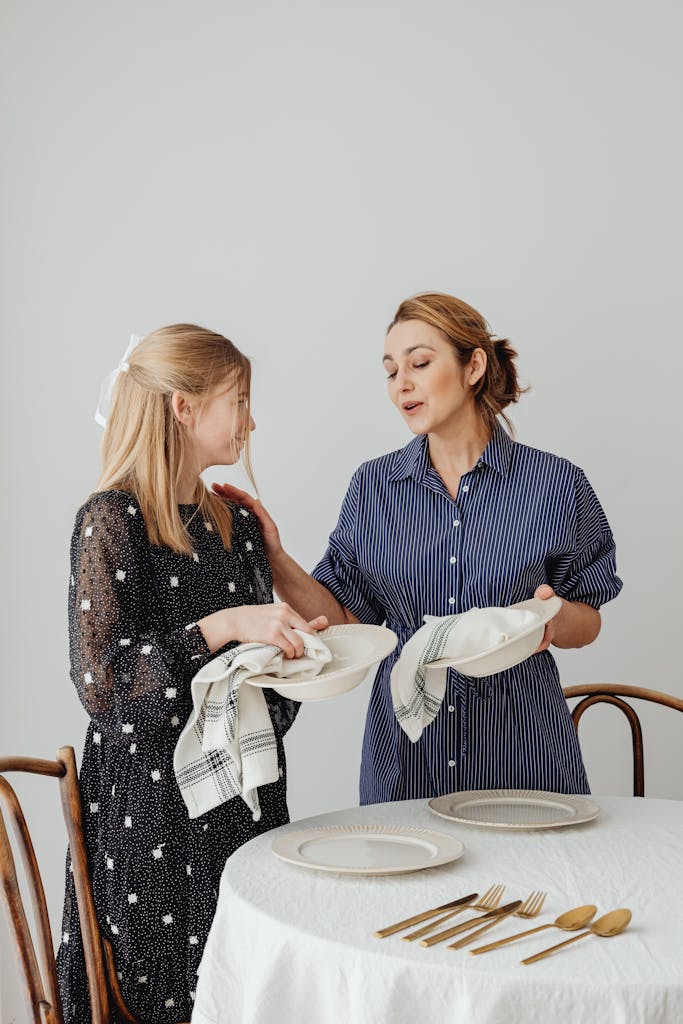
Practical Guidance: Questions, Not Rules
Instead of giving our daughters (and ourselves) a list of measurements to follow, we need to offer guiding questions that train discernment. These questions should become so ingrained that they’re almost automatic when making clothing choices.
What am I trying to communicate with this outfit? Every clothing choice sends a message, whether we intend it or not. Am I communicating that I’m a woman of dignity, worthy of respect? Or am I communicating that my value lies primarily in my physical appearance? Am I inviting people to notice my character or my body?
Is this choice rooted in security or insecurity? Am I dressing this way because I’m confident in who God made me to be? Or am I trying to get attention, approval, or validation through my appearance? Am I trying to fit in, stand out, or simply be faithful? Our clothing choices often reveal our deepest insecurities if we’re willing to examine them honestly.
Does this honor the body God gave me, or treat it as something to exploit? God created our bodies intentionally and declared them good. Are we treating our bodies with the respect and dignity they deserve as image-bearers of God? Or are we presenting ourselves in ways that invite others to view us primarily as physical objects?
Am I dressing for attention or appropriateness? There’s nothing wrong with wanting to look nice. But if our primary goal in getting dressed is to turn heads, to be noticed, to gain attention through our appearance, we’ve made an idol of approval. Appropriateness asks “what does this occasion call for?” and “am I respecting others by how I present myself?”
Does this align with the character I’m trying to cultivate? If I’m pursuing a gentle and quiet spirit, nobility, dignity, and godliness, does my outward appearance reflect that pursuit? Or is there a disconnect between who I claim to be and how I present myself?
Am I pursuing quality or just keeping up with trends? This matters more than we might think. When we chase every fashion trend, we’re communicating that our identity is wrapped up in looking current and acceptable to the culture. When we pursue timeless quality, we’re saying our worth isn’t dependent on what’s “in” this season. We’re stewarding resources wisely and refusing to let fashion dictate our choices.
These questions do something that rules cannot do. They train the heart to think biblically about every choice. They transfer to every area of life. They equip our daughters to make wise decisions in situations we never anticipated and can’t control.

Connecting Everyday Elegance to Biblical Modesty
This is why the Everyday Elegance philosophy aligns so naturally with biblical modesty. When we pursue quality over quantity, timeless over trendy, and dignity over display, modest dressing becomes the natural outflow rather than a burden to bear.
Quality fabrics drape well and cover appropriately. They don’t cling inappropriately or expose what should remain private. When we invest in well-made clothing, we’re naturally steering away from the cheaply constructed, poorly fitting fast fashion that often exposes more than it covers.
Timeless style means avoiding the extremes of fashion, which almost always include inappropriate exposure or attention-seeking elements. What’s timeless? Classic silhouettes, appropriate coverage, clothing that flatters without flaunting. What’s trendy? Whatever the culture is currently pushing, often to increasingly immodest extremes.
When we approach our appearance with dignity and self-respect, we naturally present ourselves with care rather than carelessness. We think about what we’re communicating. We consider whether our clothing honors the body God gave us.
Philippians 4:8 becomes our guide: whatever is true, noble, right, pure, lovely, and admirable. When we apply this verse to our clothing choices, we find ourselves naturally gravitating toward modest, dignified options without needing a rulebook.
Teaching Our Daughters: Heart First, Choices Second
If we want to raise daughters who dress modestly not because we’re watching but because their hearts are aligned with God’s purposes, we must teach the heart issue first and the clothing choices second.
This means we’re having conversations, not delivering lectures. We’re asking questions, not just laying down laws. We’re explaining the why behind our convictions so our daughters can develop their own biblical convictions.
It means we’re modeling what we’re teaching. Our daughters are watching how we dress, what we pursue, what we prioritize. If we’re chasing every fashion trend while telling them to dress modestly, they’ll notice the disconnect. If we’re obsessed with our appearance while telling them that character matters most, they’ll see right through us.
It means we’re patient with the process. A twelve-year-old might not fully grasp these concepts yet. A fifteen-year-old might push back against our guidance as she’s trying to figure out her own convictions, especially if this is a new conviction for your family. We stay consistent in our teaching, gracious in our responses, and confident that we’re planting seeds that will bear fruit in God’s timing.
It means we’re addressing the culture’s lies directly. Our daughters are being told constantly that their value lies in their physical appearance, that they should dress to get attention, that modesty is repressive and outdated. We need to counter those lies with biblical truth, showing them that true freedom is found in aligning ourselves with God’s design, not in conforming to cultural pressure.

When the Culture Asks “Who Cares What I Wear?”
When the world shrugs and says “Who cares what I wear today?”, the answer for the Christian should already be firmly settled.
God cares.
Not because He’s a cosmic fashion critic, but because He cares about our hearts. He cares about what motivates our choices, what we’re communicating through our appearance, and whether we’re stewarding the body He created and redeemed with the dignity and respect it deserves.
Our goal and desire is to please Him and bring Him glory in all things. Our dress, our appearance, and our bodily stewardship are foundational ways we accomplish that goal. Not the only ways, and not the most important ways, but real and meaningful ways nonetheless.
So when I stand in my daughter’s closet now, I’m not asking “which dress meets an arbitrary standard?” I’m asking “which choice reflects the heart we’re cultivating? Which choice honors God and respects the body He gave her? Which choice communicates dignity, wisdom, and godliness?”
The specific outfit matters less than the heart behind it. But make no mistake: the heart always matters. And what flows from a heart aligned with God’s purposes will look different from what flows from a heart seeking approval from the world.
Does God care what we wear? Yes. He cares about why we wear it, what it says about what we value, and whether it honors the gift He’s given us. The hemline measurement? That’s between you and Him. But the heart behind your clothing choices? That always matters to the God who sees and knows all things.
And that’s exactly the foundation we need to lay as we raise daughters in a culture that tells them the only thing that matters is whether they feel comfortable, whether they like how they look, whether they’re expressing their authentic selves. We’re raising them with a higher standard, a deeper conviction: does this please the Lord? Does this honor Him?
When that question is settled, everything else falls into place.
If you’re a mother who’s navigating these questions with your own daughters, who wants to raise them counter-culturally with biblical conviction but without legalism, I’d love to have you join us in The Hive Collective on Facebook. It’s a community of like-minded mothers who are committed to raising daughters with intention, rooted in Scripture and focused on cultivating hearts rather than just enforcing rules. We’re in this together, learning and encouraging one another as we steward the precious gift of raising girls who love the Lord. Join us there.






I love this so much! I used to teach the teens girls at church when our daughter was young. There’s so much pressure on kids and so little discussion around modesty. I use to say “modest is hottest” when they’d show me their very revealing prom dresses- and they’d laugh and probably thought I was crazy. We definitely had ALOT of discussions around the importance of appropriate clothing. I pray that some of my lessons rubbed off. 🙏
This is such a great topic and so very important. Thanks for sharing!
This is a great in depth and well written blog. I like your quick reference quick with the 6 questions to ask yourself. Thank you for sharing insight on this topic.