Protective Styles for Curly Kids: Low-Tension Looks That Stay Put
Curly kid hair can feel like a small daily mystery: you tuck everyone into bed with neat twists, and by breakfast you’re staring at a fluffy masterpiece that looks like it wrestled a hoodie and lost.
Protective styles are not about making curls “behave.” They’re about keeping hair comfortable, keeping ends from rough handling, and giving your child a look that stays put through school, playground time, and the backseat nap, all without stressing a tender scalp.
What “protective” means for kids (and what it does not mean)
A protective hairstyle is any style that reduces rubbing, tangling, and constant re-doing by keeping the hair contained and the ends tucked away. For curly kids, that usually looks like loose braids, twists, gentle buns, or a braid wrapped up into a crown.
Protective does not mean tight. Kids’ scalps are sensitive, edges are delicate, and many children are still learning to speak up when something hurts. If a style only “lasts” because it’s pulling, it’s not protection, it’s pressure dressed up as neatness.
One more thing: protective styles should still honor your child’s hair texture. The goal is healthy curls and a peaceful routine, not chasing a perfectly slick finish that takes an hour and a half of brushing.
The low-tension rule: comfort first, neat second
If you only remember one thing, make it this: low tension at the roots, secure at the ends.
A low-tension style keeps the scalp relaxed and moves the “hold” lower down the hair shaft, using gentle sectioning, soft elastics, and a little product slip. That’s how you get a style that stays put without pulling at the hairline.
You can do a simple check before you send your child out the door. Ask them to raise their eyebrows, turn their head side to side, and smile big. If they wince, it’s too tight. If they keep reaching up to “fix” it, something is pinching.
After a paragraph like this, it helps to have quick red flags in one place:
- Soreness when you touch the scalp
- Tiny bumps along the hairline
- A child who “can’t stop thinking about” their hair
- Parts that look stretched shiny
- Elastics that leave deep dents
Prep that makes styles last (without tears)
Most protective styles fail at the same point: prep. Not because you didn’t try hard enough, but because curly hair asks for moisture and slip before it asks for order.
Start on damp hair whenever you can. A spray bottle of water is often enough to re-wet and re-shape. Add a kid-friendly leave-in conditioner, then detangle gently in sections. If the brush is fighting you, add more conditioner or water. Curly hair should feel like it’s cooperating, not being negotiated with.
If you want the style to last longer than a day, pay attention to the ends. Ends need a little extra love because they’re older hair and they dry out first. A small amount of cream or butter on the last couple inches makes a big difference.
Here’s a simple routine that works for many families:
- Clean base: freshly washed, or at least refreshed with water and conditioner
- Detangle in sections: wide-tooth comb or a gentle detangling brush
- Moisturize first: leave-in for slip, then a touch of cream on ends
- Hold lightly: use a soft gel or custard only where you need control
- Secure softly: fabric-covered elastics or satin scrunchies, not rubber bands
A quick guide to low-tension styles that actually stay put
Not every style fits every curl pattern or length, and that’s okay. A good style is the one you can repeat on a regular morning and your child can wear happily.
The table below gives a practical snapshot. Times are flexible, because “time” depends on hair density, wiggles per minute, and whether the family dog is also trying to help.
| Style | Best for | Hair length | Typical time | How long it can last | Notes for keeping it gentle |
|---|---|---|---|---|---|
| Loose pigtail braids | Waves to coils | Medium to long | 5 to 15 min | 1 to 3 days | Braid loosely at the scalp, secure ends well |
| Chunky box braids (no added hair) | Coils and kinks | Shoulder length or longer | 30 to 90 min | 1 to 3 weeks | Keep sections larger to lower tension and weight |
| Two-strand twists | All textures | Short to long | 10 to 45 min | 3 to 10 days | Twists are forgiving and easy to refresh |
| Pineapple or loose bun | All textures | Shoulder length or longer | 2 to 8 min | 1 day (or nights with protection) | Use a scrunchie and avoid pulling tight at the base |
| Halo braid or crown twist | Curly to coily | Medium to long | 20 to 40 min | 1 to 2 days | Pin gently, watch the edges and nape |
1) Loose pigtail braids (the everyday workhorse)
Two braids can be sweet, simple, and surprisingly protective when you keep them loose at the roots. They distribute tension across the head instead of piling it on one ponytail spot.
If your child’s hair is fine and the braids slip out, try bigger sections, more moisture, and a softer hold product near the part. If the ends fray quickly, secure the last inch with a tiny fabric elastic and coat the ends with a dab of cream before you braid.
2) Chunky box braids without extensions (the time-saver, done gently)
For many coily and kinky textures, larger box braids can be a gift. They keep ends tucked, reduce daily styling, and can help retain moisture.
The key is “chunky” and “no extra hair.” Kids do not need added weight, and they do not need tiny braids that take all day and pull at the scalp. Keep the sections bigger, braid with calm hands, and make sure each braid can move at the base.
3) Two-strand twists and flat twists (soft, flexible, curl-friendly)
Twists are one of the best low-tension options because they don’t require the same tight weaving as braids. They also play well with mixed textures, which is common in many families.
If your child’s twists unravel easily, don’t panic. Use slightly smaller sections, add a little more leave-in for grip, and secure ends with a gentle elastic. In the morning, you can retwist just the front few pieces and keep going.
4) Pineapple, top bun, or low bun (quick protection, quick comfort)
A loose bun is protective when it’s truly loose. You want “gathered” more than “snatched.”
A helpful trick is to use a satin scrunchie and wrap it once, maybe twice. Then shape the bun with your hands instead of pulling the hair tighter. If your child gets tangles at the nape, a low bun plus a satin bonnet at night can keep that tender area from matting.
5) Halo braid or crown twist (pretty, practical, and out of the face)
A crown style is a great choice for days you want hair fully up: photos, weddings, church, or any day your child wants to feel a little extra polished.
Keep it gentle by braiding or twisting with slack at the root, then pinning the shape into place. If the front hairline is delicate, leave out a few soft curls at the edges rather than forcing every hair into the braid.
Making accessories curl-friendly (and kid-proof)
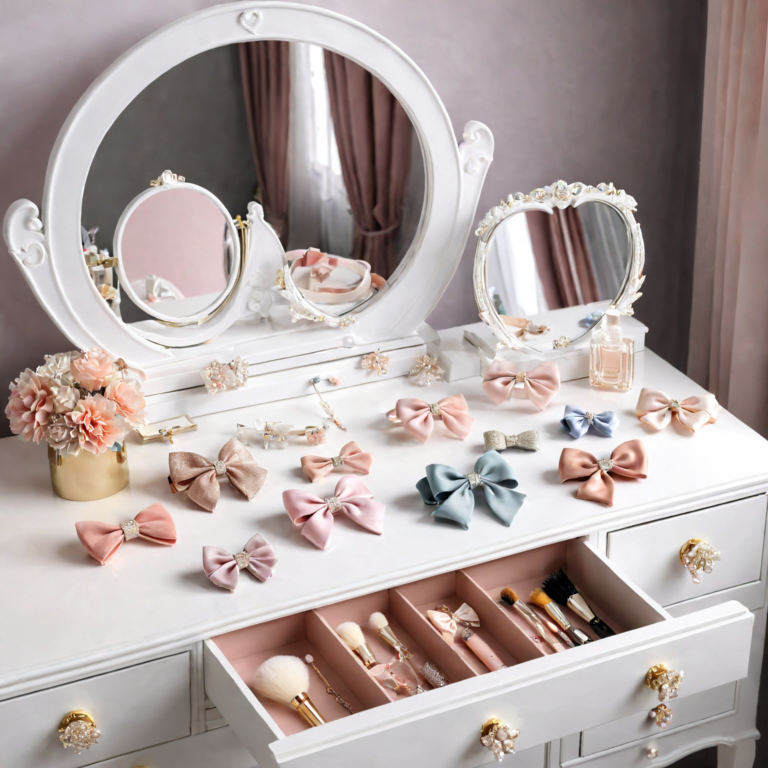
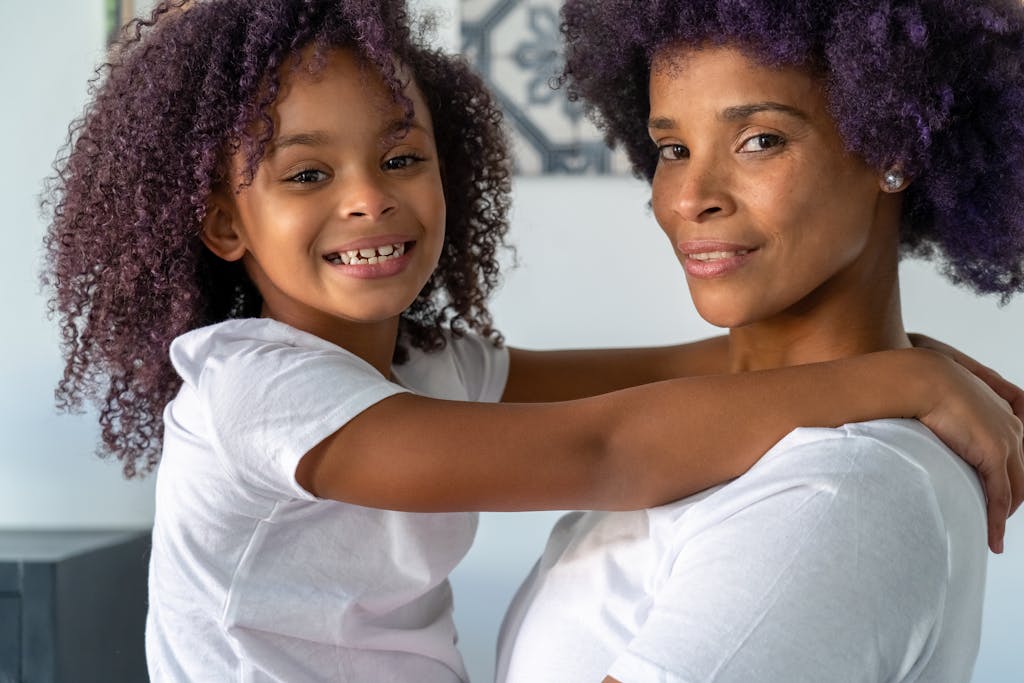
A good accessory should help a style stay put without snagging. That’s part of why handcrafted, fabric-based pieces can be so useful: they grip without biting. At Homespun HoneyBee Designs, the whole point of heirloom-quality bows and clips is that they’re meant to be worn again and again, through real life, not just photos.
Think placement and pressure. Place bows on the structure of the style, not on the most fragile hair.
One paragraph worth remembering: if an accessory is sliding, don’t tighten the hair to “make it work.” Change the accessory or move it.
A few practical placements that tend to behave:
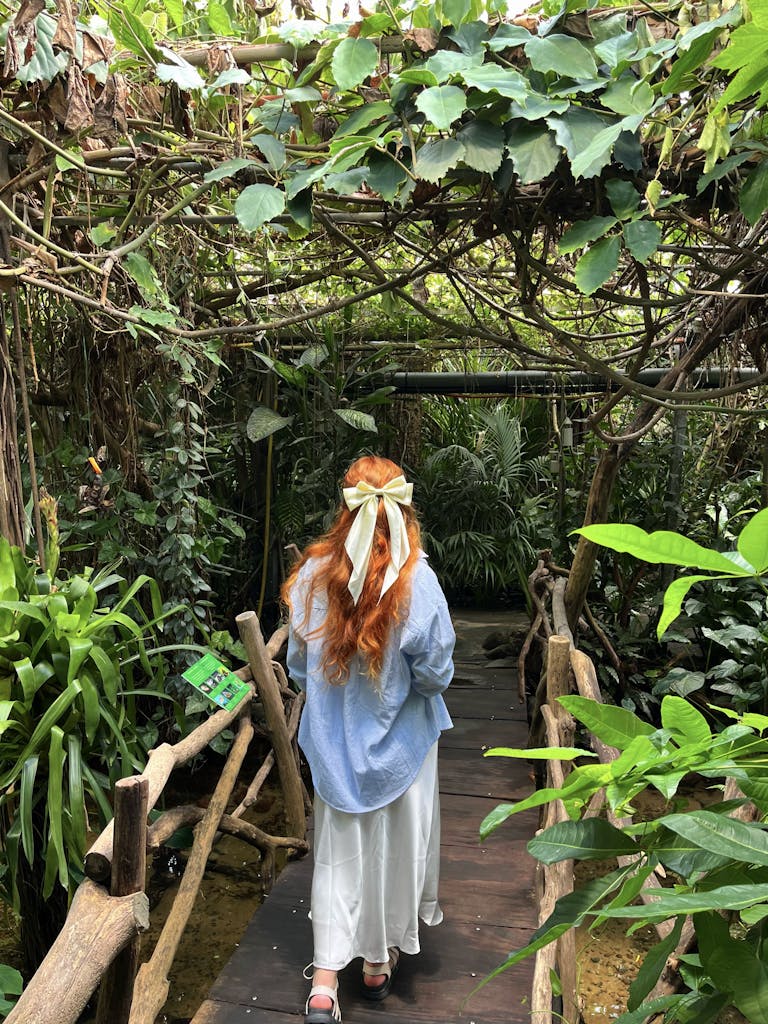
- Clip a bow onto the braid, not the loose curl beside the part
- Add a headband behind the hairline, not digging into edges
- Use a scrunchie over a bun base instead of wrapping small elastics repeatedly
Night care that keeps the style (and the peace)
A protective style that lasts two days instead of one is often won at bedtime.
Satin and silk reduce friction, which means fewer tangles and less fuzz. A satin bonnet is great if your child will keep it on. A satin pillowcase is great if they will not. You can also do both and call it a win.
For buns and pineapples, a “loose and high” approach helps curls keep their shape. For braids and twists, the goal is simply to keep them from rubbing against cotton bedding and getting roughed up.
Morning refresh can be simple: mist with water, smooth a little leave-in over frizzy spots, and press gently with your hands. Avoid dry brushing to “fix” a style. Dry brushing usually turns curls into a puff, and not the fun kind.
When to redo a style (and when to leave well enough alone)
It’s tempting to redo a style the moment it looks messy. Real life with kids will cure you of that.
If the scalp looks calm, your child is comfortable, and the hair still feels moisturized, you can often leave a style alone and just refresh the perimeter. If the style is slipping, do the smallest fix that solves the problem: re-secure an end, redo one twist near the face, or add a soft clip.
Do reset the style when buildup starts, when the scalp looks dry or flaky, or when tangles form at the nape. Protective styling is meant to lower stress, not hide a problem that needs care.
If you’re building a rhythm, a gentle weekly wash day plus a midweek refresh works well for many families. Some kids need more frequent washing, some less. Pay attention to the hair in front of you, and give yourself permission to keep it simple.
And if today’s “protective style” is a loose bun, a bow, and everybody gets to school with kindness still intact, that counts as a win worth saying grace over. How do you care for your curly girl’s hair?